Critical infrastructure is a named target
Energy, utilities and transport operators across the region face sustained, well-resourced threats.


Read the outcomes and the posture is clear: planning investigations, commanding a major incident, keeping the business running, answering to the board. Cryptography is the one deeply technical subject, and it stands alone here.
Note: Duration will be based on your experience and it can be advanced bachelors too which differs from prospects to prospects
Five required subjects: Fundamentals of Cyber Security, Network, Infrastructure and Systems Security, Applications of Cyber Security, Security Management and Governance, and Cryptography. That last one is a genuine rarity — no other qualification in this listing treats encryption as a subject in its own right.
The published outcomes say more about the intended reader than the subject titles do. They cover the core principles of digital investigations, planning for forensics teams, the people and equipment needed during a major incident, business continuity, the role of senior leaders, and how data protection law shapes strategy. This is written for the person who runs the response, not the person at the keyboard during it. The stated aims add digital forensics, ethical hacking and cloud security to the picture.
Framework details: 120 credits at Level 7, number 610/3596/8, with study hours left blank. The specification is dated January 2026, among the most recently refreshed here.

Encryption principles, modes and the regulations around them get a dedicated subject.
Outcomes cover the people and resources needed to manage a major suspected incident.
Applying continuity management to major incident planning is published as an outcome in its own right.
Security Management and Governance sits among the five required subjects rather than at the margins.
One outcome deals specifically with how data protection law affects strategy-setting at senior level.
The centre specification carries a January 2026 date, which is newer than most documents in this range.
 Q
Energy, utilities and transport operators across the region face sustained, well-resourced threats.
Recent regional privacy regimes put compliance obligations on boards, not just on technical teams.
Many organisations can detect an incident but have no rehearsed plan for commanding one.
Regulated entities in the Gulf's financial hubs are assessed on security governance maturity.
Qualifi states the qualification is offered in the UK and overseas through approved centres.
The awarding body publishes no fee, so request a written, itemised quotation.
Join professionals across leading organizations worldwide
Graduates placing at world-class organisations across aviation, energy, finance and government
















Join our growing global network of industry leaders
Real-world perspectives from the minds shaping global business education

Alexander is a leader in AI and cloud integration, specializing in ethical AI strategy and financial services. He develops courses on Machine Learning, NLP, and AI ethics, driving tech business growth.

Dr. David Holliman, an educator with 15+ years of experience, is Chairman of Holliman Holdings, managing business operations in tourism, trading, asset management, and education

Dr. Othman Abu Khurma, a passionate science educator with 18 years' experience in Jordan and the GCC, excels in designing engaging teaching materials, fostering dynamic discussions, enhancing learning for educators and students.

Prof. Steve, a global leader and entrepreneur with 20+ years of experience, delivers corporate training and academic courses on negotiation, conflict resolution, mediation, and cross-cultural communication.

Veronika Knight delivers practical, human-centered learning experiences for corporate teams across the UAE and GCC. Her approach focuses on developing soft skills and encouraging meaningful behavioural change, helping learners apply their knowledge with confidence in the workplace.

Shyma brings over 10 years of teaching experience and a background at Microsoft, combining academic expertise with practical industry insights to support learners’ professional growth.
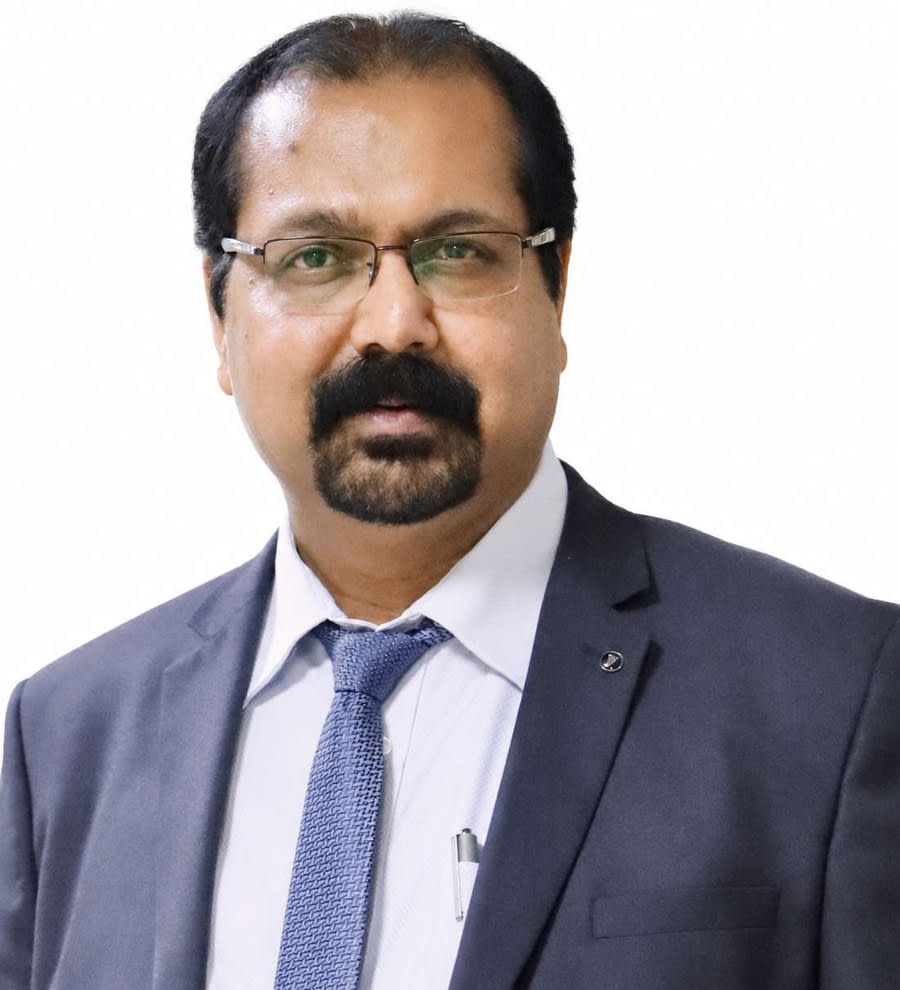
Dr. Shanmugan brings over 26 years of experience in management education and research across India and the UAE, with expertise in marketing, international business, research methods, and digital transformation.

Prof. Yana Nikitina is an accomplished economist, lecturer, and researcher with a PhD in Economics and a Master’s in Education Leadership. She brings extensive experience in teaching Economics, Finance, Accounting, and Business, with a strong commitment to student-centred learning, research excellence, and professional development.
Speak to our admissions team for a personalised breakdown based on your intake and study mode.
Request Fee StructureNo commitment required. We'll connect you with an advisor.
They do, and we have printed them exactly as Qualifi publishes them rather than tidying them up. Every other Level 7 qualification in this listing that names a prior qualification asks for Level 6 or a first degree, so this looks very much like wording carried over from a lower-level template. We are not going to present an unusually low published bar as a feature, and you should not treat it as one either: the study itself is pitched at Level 7, with master's-level reading and writing. Ask your centre what it actually requires, and be honest with yourself about the jump.
Only in part, and the outcomes show it plainly. Two of the ten deal with cryptographic principles and the regulations around encryption. The other eight concern planning investigations, resourcing a major incident, business continuity, senior leadership, performance monitoring and data protection strategy. That is the work of a security manager, a CISO's deputy or a head of risk, not a penetration tester. If you want to spend your time on tooling and exploitation, look at the operational Level 5 awards or at a practical certification instead.
A fair question, and we cannot reconcile them for you. The outcomes cover digital investigations, forensics teams, incident resourcing, business continuity and strategic leadership, yet none of those has a subject title of its own. Meanwhile Applications of Cyber Security, which is a published subject, has no outcome pointing at it. Either the five published subjects are broader than their names suggest, or the web page is summarising a fuller structure. Both lists are reported here as published; the January 2026 specification is the document that should settle it.
Both are named, but in the aims rather than the subject list. Qualifi's published aims say learners will gain in-depth knowledge of network security, digital forensics, ethical hacking and cloud security. None of those four phrases appears in a subject title, so we can confirm the award claims to cover them without being able to show you where. Before enrolling on the strength of any one of them, ask the centre which subject carries it and roughly how much of the assessment it accounts for.
Not with the awarding body, which publishes neither. Qualifi designs the qualification, keeps it on the register and certificates it at the end; everything about delivery, dates and cost belongs to your approved centre. Because no total qualification time is published, you have no official hours figure to hold a proposed schedule up against — worth remembering if a centre promises a fast completion. Ask for the intake date, the realistic finish date, and a quotation in which tuition, registration and certification are each priced on their own line.
Not as published. Qualifi lists no relationship with (ISC)², ISACA, CREST, CompTIA or the National Cyber Security Centre, and no exemption from any of their assessments. Those certifications set their own syllabuses, examinations and experience requirements, and only those bodies can say whether anything you study elsewhere counts. The sensible reading is that this award and a professional certification do different jobs: one evidences regulated academic study in security management, the other evidences tested competence against an industry standard.
Share a few details and our admissions team will reach out to guide you through the next steps.