Infrastructure is being built now
Data centres and national digital infrastructure projects across the GCC need people who can design and secure networks.


A deliberate merge of two Qualifi routes. Seven security subjects meet four networking subjects, with no general IT padding and no leadership content. Qualifi publishes exactly which existing qualifications the units came from, which is rare candour.
Note: Duration will be based on your experience and it can be advanced bachelors too which differs from prospects to prospects
Securing a network and building one are usually taught apart, which is odd, because the people who do either job well tend to understand both. You cannot defend infrastructure you do not understand, and you cannot design infrastructure sensibly without knowing how it gets attacked. This award puts the two together on purpose.
Qualifi is unusually open about how it was assembled. The page names the four existing qualifications its units were drawn from — the Level 4 and Level 5 diplomas in cyber security, and the Level 4 and Level 5 diplomas in IT networking — each with its own number. The result is a combination rather than a new invention, and knowing that tells you precisely what you are signing up for.
Eleven subjects make it up. On the defensive side: threat and risk, network security with data communications, database security and programming, incident response with forensic investigation, cryptography, digital forensics, and security strategy as laws and policy. On the infrastructure side: physical networking, system administration, routing and switching, and network design. Together they come to 240 credits, catalogued as 610/3042/9.

Security and networking are studied together rather than one being a footnote to the other.
Qualifi names the four source qualifications with their numbers, so you can see exactly what has been combined.
Physical networking, routing and switching, and network design and administration go well beyond an introductory treatment.
Incident response with forensics, and digital investigations and forensics, both feature as distinct subjects.
Unlike the IT family awards, there is no maths, graphics or PC maintenance content taking up space.
No prior qualification and no experience requirement are published — only age, English and references.
 Q
Data centres and national digital infrastructure projects across the GCC need people who can design and secure networks.
In many regional organisations the same team runs the network and defends it, which is exactly this skill mix.
Suited to people who want to do the work rather than chair the response.
Entry asks for age, English and references only, making it reachable for self-taught practitioners.
Qualifi lists its Level 7 diplomas as the onward step, skipping Level 6 entirely.
Cisco and CompTIA routes are not part of this. Budget for them separately if your employer expects them.
Join professionals across leading organizations worldwide
Graduates placing at world-class organisations across aviation, energy, finance and government
















Join our growing global network of industry leaders
Real-world perspectives from the minds shaping global business education

Alexander is a leader in AI and cloud integration, specializing in ethical AI strategy and financial services. He develops courses on Machine Learning, NLP, and AI ethics, driving tech business growth.

Dr. David Holliman, an educator with 15+ years of experience, is Chairman of Holliman Holdings, managing business operations in tourism, trading, asset management, and education

Dr. Othman Abu Khurma, a passionate science educator with 18 years' experience in Jordan and the GCC, excels in designing engaging teaching materials, fostering dynamic discussions, enhancing learning for educators and students.

Prof. Steve, a global leader and entrepreneur with 20+ years of experience, delivers corporate training and academic courses on negotiation, conflict resolution, mediation, and cross-cultural communication.

Veronika Knight delivers practical, human-centered learning experiences for corporate teams across the UAE and GCC. Her approach focuses on developing soft skills and encouraging meaningful behavioural change, helping learners apply their knowledge with confidence in the workplace.

Shyma brings over 10 years of teaching experience and a background at Microsoft, combining academic expertise with practical industry insights to support learners’ professional growth.
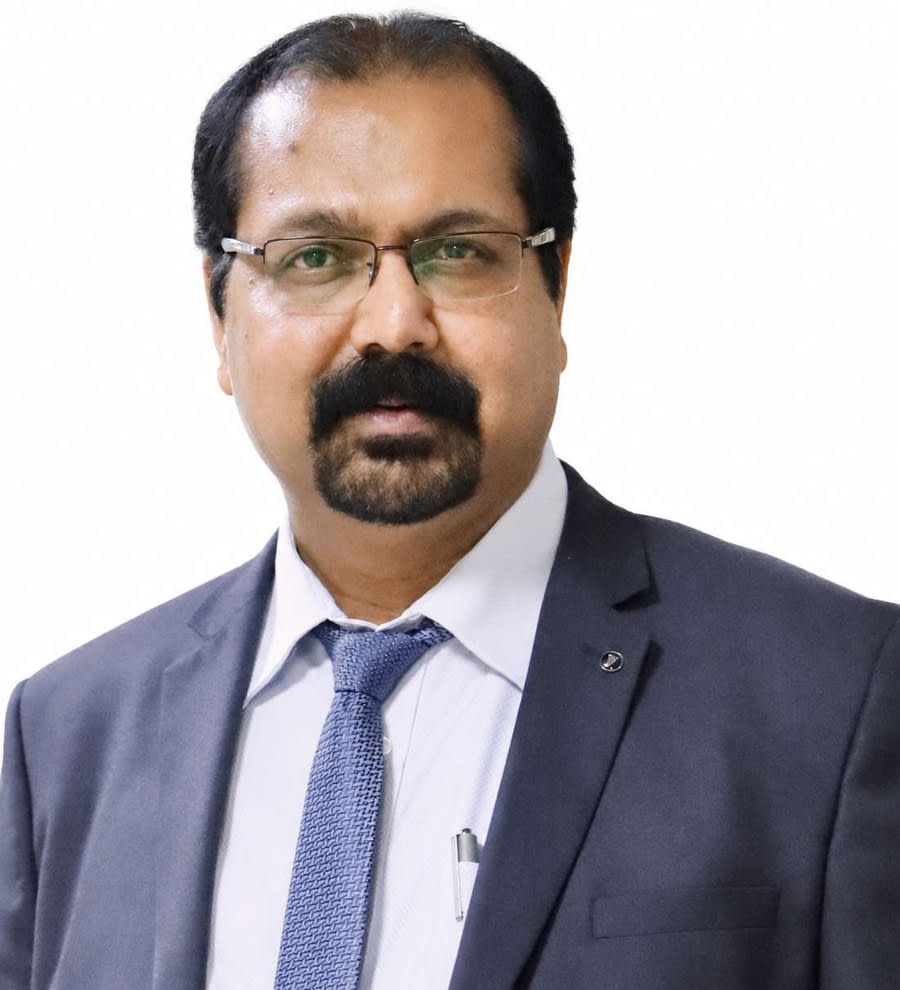
Dr. Shanmugan brings over 26 years of experience in management education and research across India and the UAE, with expertise in marketing, international business, research methods, and digital transformation.

Prof. Yana Nikitina is an accomplished economist, lecturer, and researcher with a PhD in Economics and a Master’s in Education Leadership. She brings extensive experience in teaching Economics, Finance, Accounting, and Business, with a strong commitment to student-centred learning, research excellence, and professional development.
Speak to our admissions team for a personalised breakdown based on your intake and study mode.
Request Fee StructureNo commitment required. We'll connect you with an advisor.
Think of it as the same security core with a different second half bolted on. Both awards teach the seven defensive subjects. Where the standalone cyber security diploma then turns towards the boardroom, this one turns towards the server room: you study hardware and cabling, run systems, move traffic between networks and design the estate rather than preparing statements and leading a response. The honest test is whether you would rather be in the meeting or at the console.
Because it is telling you where the content came from. The overview names four existing Qualifi awards — cyber security at Levels 4 and 5, IT networking at Levels 4 and 5 — and gives each number. This is a merged qualification rather than a newly written one. Most awarding bodies do not disclose that, and it means you can see precisely what the combination contains before enrolling.
We noticed, and we are telling you rather than filling the gap. Qualifi's page carries a link to an outcomes section but no outcomes are printed. Since inventing them would mean putting words in the awarding body's mouth, the coverage shown on this page is described from Qualifi's stated aim and its published subject list, and is labelled as such. The Centre Specification should carry the formal outcomes.
Nothing published says so. The content clearly overlaps with what vendor certifications cover — routing, switching, network design, security fundamentals — but overlap is not alignment, and Qualifi makes no claim of mapping, exemption or recognition. If your employer or your target role expects a specific certification, plan to take it separately rather than expecting this to count towards it.
Less than you might expect. You need to be 18 or over, meet IELTS 6 or equivalent if English is not your first language, and normally provide two references with one preferably academic. No prior qualification is listed and no experience clause appears. That makes it more open on paper than the cyber security award, which asks for Level 3 qualifications, relevant experience or a Level 4 in another field.
Four subjects out of eleven sit on the infrastructure side; the remaining seven are security. So the weighting favours security, with enough hardware, administration and design content to keep it grounded in real equipment rather than diagrams. Anyone wanting networking as the main event, with general IT underneath it, will find Qualifi's IT-Networking award the better match.
Share a few details and our admissions team will reach out to guide you through the next steps.